Bunny and Duck with Flowers Line Art Review
As a designer who spends more time at the hoop than away from it, I approach every new machine embroidery design with a critical eye. It is not just about whether an image looks cute on a screen; it is about how that image translates into thread, how it sits on fabric, and whether it will hold up to the wear and tear of a finished product. Recently, I evaluated the Bunny and Duck with Flowers Line Art for a potential spring collection, and here is my practical assessment of how this graphic performs in real-world scenarios.
First Impressions and Visual Personality
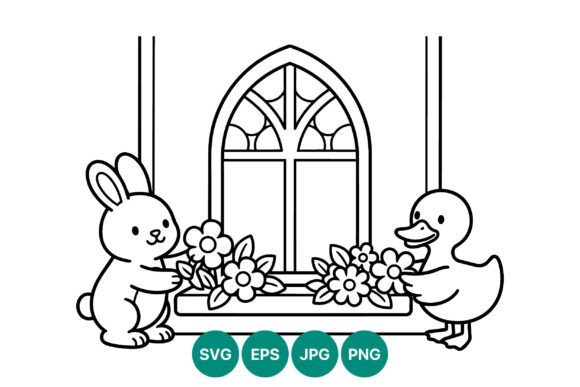
When I first opened the files included in the download—a ZIP folder containing SVG, PNG, JPG, and EPS formats—I was immediately drawn to the mood of the piece. The concept of a cute bunny and duck holding bunches of flowers while standing by a detailed gothic style arched window creates a fascinating juxtaposition. You have the softness of the animals and flora contrasting with the rigid, architectural lines of the gothic window. This is not your standard nursery fare; it has a whimsical, storybook quality that feels slightly more mature and artistic.
The black and white line art style is particularly promising for embroidery. In the world of Illustrations and Graphics, high-contrast line work often translates best into stitch because it relies on definition rather than complex color blending. However, "line art" in a digital file does not always mean "running stitch" in an embroidery file. My first thought was to consider how a digitizer would interpret those gothic arches. Would they become dense fill stitches that make the fabric stiff, or would they remain crisp running stitches that preserve the delicate nature of the drawing? For a project like this, maintaining that lightness is crucial.
Real-World Application: The Spring Tote Project
To truly test the viability of this design, I envisioned a specific use case: a custom embroidered tote bag for a boutique client. Tote bags are popular handmade products that require designs capable of covering a decent surface area without losing detail. The vertical orientation of the gothic window fits perfectly on the panel of a tote or an apron.
If I were stitching this onto a canvas tote, the contrast between the dark thread and the natural fabric would make the line work pop. The bunny and duck, holding their flowers, serve as excellent focal points. Because the design is essentially a scene, it tells a story, which increases the perceived value of the finished product. Customers are often willing to pay more for items that feel like unique art pieces rather than generic logos. This design has that "illustration" feel that appeals to buyers looking for something distinct for their small shop product lineup.
Beyond totes, I can see this working beautifully as sweatshirt embroidery. A oversized crewneck with this design centered on the chest or placed large on the back would fit the current trend of cottage-core aesthetics. The gothic element adds a touch of edge that prevents it from being too saccharine, making it appealing to a wider demographic, including teens and young adults who might skip traditional baby motifs.
Technical Considerations for Stitching
While the visual appeal is strong, there are technical hurdles to clear before putting this under the needle. The description mentions a "detailed gothic style arched window." In embroidery terms, "detailed" can be a double-edged sword. If the lines in the window tracery are too close together, you risk thread bunching or the fabric puckering, especially if you are using a stitch density that is too high.
Before committing to a final run, I strongly advise testing the design on scrap fabric that matches your intended material. If you are working with a textured fabric like a waffle knit or a heavy linen, fine lines might get lost. Conversely, on a smooth broadcloth, the details should shine. You must also check the hoop size requirements. A scene with a full background element like a window likely requires a larger hoop (perhaps 5x7 or larger) to ensure the proportions remain correct. Trying to shrink this down to a small 4x4 hoop for a pocket logo might result in the loss of the intricate window details, turning them into a solid blob of thread.
Stabilizer choice is another non-negotiable factor. Given the likely mix of structural lines (the window) and organic shapes (the animals and flowers), a cut-away stabilizer would be my recommendation for apparel to prevent distortion over time. For a home decor item like a pillow cover or tea towel, a tear-away might suffice, provided the fabric is stable enough to handle the stitch count without warping.
Navigating Fabric and Color Challenges
One of the advantages of a black and white line art design is its versatility with thread colors. While the default assumption is black thread on white fabric, do not limit yourself. Imagine this design stitched in deep navy on a cream sweatshirt, or even a tonal look where the thread is only slightly darker than the fabric for a subtle, embossed effect. However, be cautious with dark fabrics. If the design relies on negative space (the fabric showing through as part of the image), stitching it on a black garment might obscure the intended effect unless the digitized version includes a satin stitch border or fill to define the edges.
Curved surfaces present another challenge. If you plan to use this for custom apparel like caps or visors, the flat, architectural lines of the gothic window could distort significantly over the curve of the front panel. This design is best suited for flat or semi-flat surfaces like t-shirts, tote bags, patches, or wall hangings. If you must put it on a cap, ensure your digitizer has accounted for push-and-pull compensation so the window doesn't look like it's melting.
Commercial Viability and Brand Consistency
For Etsy sellers and creative entrepreneurs, consistency is key to building a recognizable brand. The Bunny and Duck with Flowers Line Art offers a specific aesthetic that can anchor a spring or Easter collection. Because it comes in vector formats like SVG and EPS, you have the flexibility to resize it for various design assets, from printable mockups for your online listings to actual digital embroidery file conversions if you have access to digitizing software.
However, a crucial reminder for anyone selling finished goods: always verify the licensing terms included in the download. Just because a file is available for purchase does not automatically grant commercial rights for unlimited sales. Check if there are restrictions on the number of physical items you can produce or if the license covers use in commercial embroidery services. Protecting your business means respecting intellectual property, so confirm these details before listing your personalized gift items.
Final Verdict for Makers
In conclusion, the Bunny and Duck with Flowers Line Art is a standout piece for designers looking to add narrative depth to their projects. It moves beyond simple icons to offer a scene that invites closer inspection. Its strength lies in its adaptability across different mediums, from baby embroidery on onesies (provided the details are simplified for small hoops) to statement pieces on adult apparel.
My advice is to treat this design as a premium asset. Do not rush the setup. Test your tension, choose your stabilizer wisely, and select fabrics that honor the intricacy of the gothic elements. When executed correctly, this design elevates a simple embroidery project into a piece of wearable art that customers will treasure. Whether you are creating holiday gifts, boutique merchandise, or expanding your portfolio of applique design inspirations, this graphic provides a solid foundation for high-quality, professional results.