Otter Floating Flowers Line Art: A Designer's Review
As someone who spends more time staring at stitch maps than most people care to admit, I approach new machine embroidery design files with a healthy dose of skepticism. We have all been there: you download a beautiful graphic, load it onto your machine, and realize too late that the density is off or the details are too fine for the intended fabric. That is why I took a close look at the Otter Floating Flowers Line Art before committing it to a client project. This isn't just about whether the image looks cute on a screen; it is about how it translates into thread, how it holds up after a wash cycle, and whether it adds genuine value to a handmade product.
First Impressions and Visual Personality
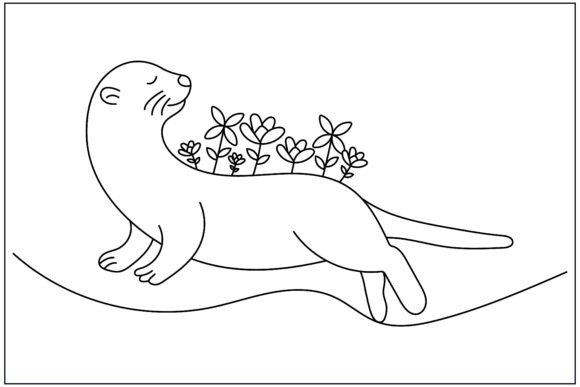
When I first opened the ZIP file containing the Otter Floating Flowers Line Art, the immediate impression was one of whimsical calm. The composition features an otter surrounded by floating floral elements, rendered in a clean line art style. For those of us working in Illustrations and Graphics, line art can be tricky. It relies entirely on the confidence of the line and the spacing between elements. There is no heavy fill stitch to hide imperfections here. The mood is playful yet sophisticated, making it versatile enough for a nursery setting or a trendy boutique apparel line.
The layout feels balanced, with the organic curves of the flowers complementing the rounded shapes of the otter. From a design judgment perspective, this kind of flow is essential for embroidery. Sharp, jagged angles often cause thread breaks or puckering, but the natural curves in this design suggest it will stitch out smoothly. The level of detail appears moderate; it is intricate enough to be interesting but not so dense that it becomes a stiff patch of thread on soft fabric.
Real-World Application: The Tote Bag Test
To truly evaluate this embroidery file, I envisioned a specific real-life scenario: a custom order for a local bookstore needing branded tote bags. Tote bags are notorious for having a coarse weave, which can make fine lines disappear. I imagined placing the Otter Floating Flowers Line Art on a natural canvas tote. Because the design is line-based, it avoids the "cardboard effect" that heavy saturation causes on large surface areas.
In this context, the design shines. It would likely work best with a running stitch or a very narrow satin stitch interpretation, depending on how the digitizer handled the conversion. If you are using this for custom apparel, such as a sweatshirt or a hoodie, the open nature of the line art allows the fabric texture to breathe through. This is crucial for comfort. Nobody wants a giant, stiff block of embroidery on their chest. For a personalized gift like a baby blanket, the softness of the line work ensures the finished item remains cuddly rather than abrasive against sensitive skin.
Ideal Projects for This Design
Based on the visual weight and theme, here is where I see this design performing best in a commercial or hobbyist setting:
- Tote Bag Design: The open line work complements canvas and cotton blends without overwhelming the material.
- Sweatshirt Embroidery: Perfect for chest logos or sleeve accents on fleece and French terry.
- Baby Embroidery: Gentle themes and non-dense stitching make it safe and soft for onesies and bibs.
- Embroidered Patch: Could be easily adapted into a merrow-edge patch for hats or jackets.
- Holiday Embroidery: With a simple color change, the flowers could reflect seasonal palettes for spring or summer gifts.
Technical Considerations and Fabric Challenges
While the aesthetic is strong, practical execution requires caution. Line art designs live and die by their stitch density and the stability of the hoop. If you are planning to stitch the Otter Floating Flowers Line Art on stretchy fabrics like jersey knit or performance wear, you must be vigilant. Without the right stabilizer, those long runs of stitching can distort the image, turning the otter's smile into a grimace.
I also worry slightly about very small hoop sizes. If the design is scaled down too much for a cap or a small pocket, the fine lines of the flowers might merge together. Thread has a physical width, unlike pixels on a screen. What looks crisp in a printable mockup might become a muddy blob if the scale is incorrect. For curved surfaces like caps, the placement of the floating flowers needs to be centered perfectly to avoid visual distortion caused by the curvature of the buckram.
Furthermore, consider the thread colors. Line art relies on contrast. On a dark fabric, you will need high-quality rayon or polyester thread with good sheen to make the lines pop. On light fabric, ensure the thread isn't too translucent, or the backing stabilizer might show through the gaps in the design, ruining the clean look.
Designer Notes for Best Results
Before you commit to a production run or list this as a small shop product on Etsy, follow these practical steps:
- Test on Scrap Fabric: Always stitch a sample on the exact same material you intend to sell. Check for puckering and registration.
- Check Stitch Density: Inspect the back of the hoop. If there is excessive thread buildup, you may need to adjust tension or switch to a lighter weight top thread.
- Review Small Details: Zoom in on the flower petals. Are they too close together? If so, consider simplifying the digitizing for smaller sizes.
- Mockup Testing: Create black and white mockups to see if the design holds its shape without the distraction of color.
- Confirm Licensing: Since these files come in a ZIP, verify the license terms. Can you sell the finished product? Can you sell the digital file itself? Never assume.
Impact on Brand and Customer Perception
Ultimately, the choice of design assets dictates the perceived value of your craft business. Using a well-chosen design like Otter Floating Flowers Line Art signals professionalism. It shows that you understand balance and subtlety. Customers are increasingly savvy; they can tell the difference between a generic, overly saturated clip-art style embroidery and a thoughtful, well-executed piece.
This design fosters trust. When a customer receives a pillow cover or a kitchen towel with clear, crisp stitching and a charming subject, they associate that quality with your brand. It enhances buyer engagement because the imagery is shareable and emotionally resonant. Whether you are an Etsy seller looking to expand your catalog or a decorator fulfilling a bulk order for a boutique, the versatility of this illustration offers a solid foundation for a high-quality finished product.
In conclusion, the Otter Floating Flowers Line Art is a promising addition to any designer's library, provided it is treated with the technical respect it deserves. It bridges the gap between digital Graphics and tactile art beautifully. Just remember to respect the limitations of the needle and thread, choose your fabrics wisely, and always prioritize a test stitch. With the right approach, this design can become a staple in your portfolio, delighting customers and standing the test of time.