Daisy Flowers and Bee: A Designer's Review
As someone who spends most of their day staring at screens filled with design assets and then translating those pixels into thread, I approach every new file with a healthy dose of skepticism. We have all been there: you download a beautiful graphic, only to find that the lines are too close together for a needle to navigate, or the details vanish entirely once stitched onto textured fabric. That is why I took a closer look at the Daisy Flowers and Bee Black White Vector set. This isn't just about whether the image looks cute on a monitor; it is about whether it holds up as a functional machine embroidery design for real-world products.
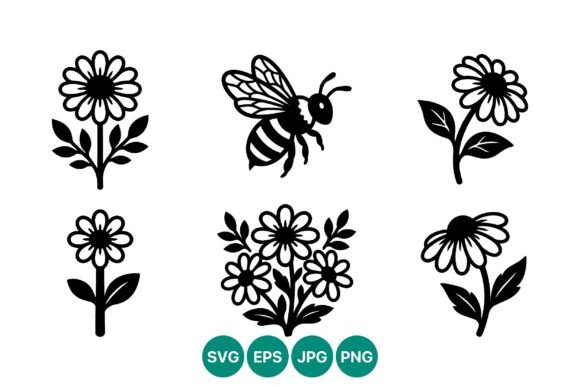
My first impression of this collection was its clean, high-contrast aesthetic. The black and white palette immediately suggests versatility. In the world of Illustrations and Graphics, monochrome sets are often the workhorses of a designer's library because they adapt so well to different brand colors. The daisy flowers feature distinct petals and defined leaves, while the bee boasts a striped body and what appears to be delicate, translucent wings in the vector format. Visually, the mood is cheerful yet classic, fitting perfectly into the current trend of cottage-core and botanical themes that are dominating boutique shops and Etsy listings right now.
Translating Vectors into Stitched Reality
The core question for any embroidery professional is how these vectors translate into an embroidery file. Since this product provides SVG, EPS, PNG, and JPG formats, it is primarily a resource for digitizers or those using software that converts vectors directly to stitch data. The clarity of the lines in the source file is crucial. In my evaluation, the separation between the bee's stripes and the flower petals looked sharp enough to handle conversion without excessive merging, provided the digitizer sets appropriate pull compensation.
I envisioned a specific real-life scenario to test the potential of this design: a custom order for a local café needing branded tote bags and aprons. They wanted something organic and friendly but not overly childish. The Daisy Flowers and Bee Black White Vector fit this brief perfectly. For the tote bags, I imagined using a bold satin stitch for the outlines to give definition against the canvas texture, while employing a lighter fill stitch for the flower centers to add dimension without creating a heavy, cardboard-like feel. The bee's wings, being translucent in the illustration, would need careful handling—perhaps a sparse running stitch or a very light fill to mimic that airy quality without compromising the structural integrity of the fabric.
Ideal Applications for Small Businesses
This design set shines when applied to items that benefit from clear, graphic imagery. For custom apparel like sweatshirts or t-shirts, the simplicity of the black and white motif allows it to pop against both light and dark garments. If you are an Etsy seller looking to expand your handmade product line, this could easily become a staple for baby embroidery projects. Imagine a soft muslin onesie with a small daisy cluster on the chest; the gentle curves of the flowers suit the innocence of baby wear.
Beyond clothing, this set is excellent for home decor. A pillow cover or a kitchen tea towel featuring the bee and daisies creates an instant focal point. For holiday embroidery gifts, particularly for spring occasions like Easter or Mother's Day, this theme is evergreen. The design also works well for creating an embroidered patch. Because the shapes are self-contained and distinct, they would digitize cleanly into a merrow-edge patch, which is a high-value item for craft fairs and small shop products.
Navigating Technical Challenges
However, no design is without its challenges, and a responsible review must address where caution is needed. The level of detail in the bee's wings and the intricate connections between leaves require careful attention to stitch density. If you are working on stretchy fabric, such as a jersey knit t-shirt, high density can cause puckering. In these cases, using a high-quality cut-away stabilizer is non-negotiable. Similarly, if you plan to use this on a cap or another curved surface, the layout might need adjustment to prevent distortion during the stitching process.
Another consideration is the hoop size. While the vector files can be scaled infinitely on a computer, physical embroidery is limited by your machine's hoop capabilities. If you scale the design down too much for a small pocket logo, the fine details of the bee's stripes might merge into a solid blob. It is essential to test the design on scrap fabric at your intended size before committing to a final finished product. Always check the smallest elements; if a gap is narrower than your needle's width, it simply will not stitch out cleanly.
Enhancing Brand Value and Customer Trust
From a business perspective, the quality of your source art directly impacts your brand consistency. Using crisp, professional design assets like the Daisy Flowers and Bee Black White Vector elevates the perceived value of your goods. Customers may not know the difference between a low-resolution clipart and a proper vector, but they certainly notice when an embroidery job looks muddy or poorly defined. Clean lines and thoughtful spacing build trust. When a client receives a personalized gift or a boutique item where the stitching is crisp and the design is recognizable, it reinforces their confidence in your craftsmanship.
For those creating digital products or printable mockups to sell alongside physical goods, these graphics offer a cohesive look. You can use the original vector files to create marketing materials that match your embroidered items exactly, providing a seamless experience from online browsing to unboxing.
Final Verdict and Practical Tips
In conclusion, the Daisy Flowers and Bee Black White Vector is a robust resource for designers who understand how to prepare files for embroidery. It offers a charming aesthetic that fits a wide range of commercial and personal projects, from nursery decor to corporate branding. However, its success relies on the user's ability to manage the transition from screen to thread.
Before launching into production, I strongly advise the following steps:
- Test on scraps: Always run a sample on the exact fabric type you intend to use to check for puckering or registration issues.
- Check contrast: Ensure your thread colors provide enough contrast against the fabric, especially since the original design is black and white.
- Review density: Adjust your digitizing settings to ensure the stitch count is appropriate for the fabric weight.
- Verify licensing: Since this is a downloadable asset, confirm the specific license terms regarding commercial use before selling finished items or digital derivatives.
- Inspect details: Zoom in on the bee's wings and leaf tips in your embroidery software to ensure paths are closed and details are large enough to stitch.
With the right preparation and a keen eye for detail, this design set can be a powerful tool in your creative arsenal, helping you create beautiful, marketable items that stand out in a crowded marketplace.